10 Formula Feeding Essentials That Make Life Easier for New Parents

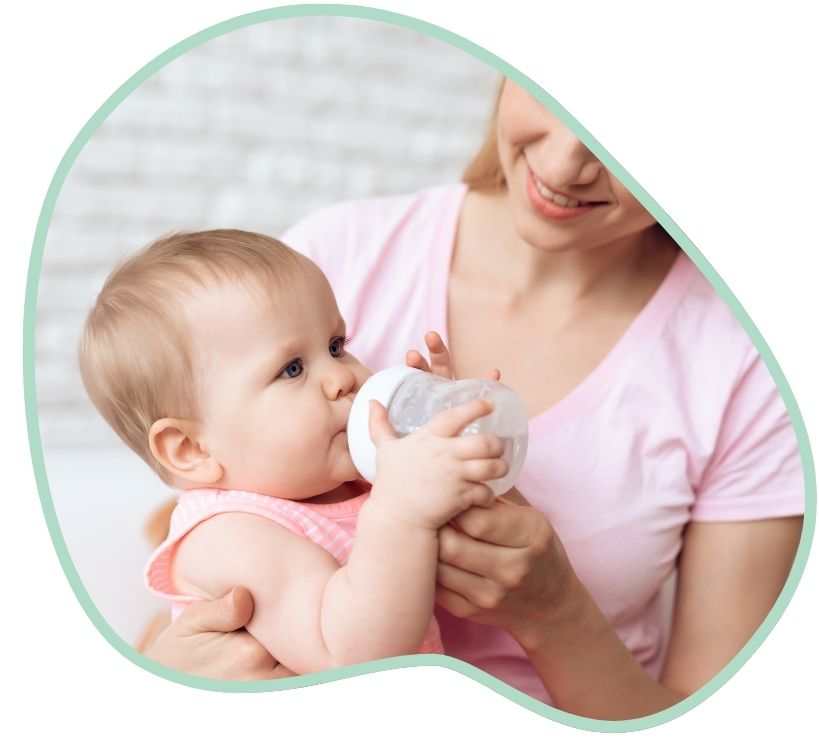
Formula feeding can feel overwhelming at first.
From figuring out the right bottles to prepping bottles at night and traveling with formula, there’s a lot to manage.
The good news? With the right products, formula feeding can become much easier, more organized, and even a little enjoyable.
In this post, I’m sharing 10 baby formula feeding must-haves that save time, reduce stress, and make life simpler for new parents.
These formula feeding essentials have been vetted by thousands of families and the products have been used by myself (a very frugal mom, pediatric NP, and lactation consultant) and members of my community. I’ve linked these products throughout the post, and you can also find them all organized on my ShopMy page.
1. Bottles designed for easy feeding

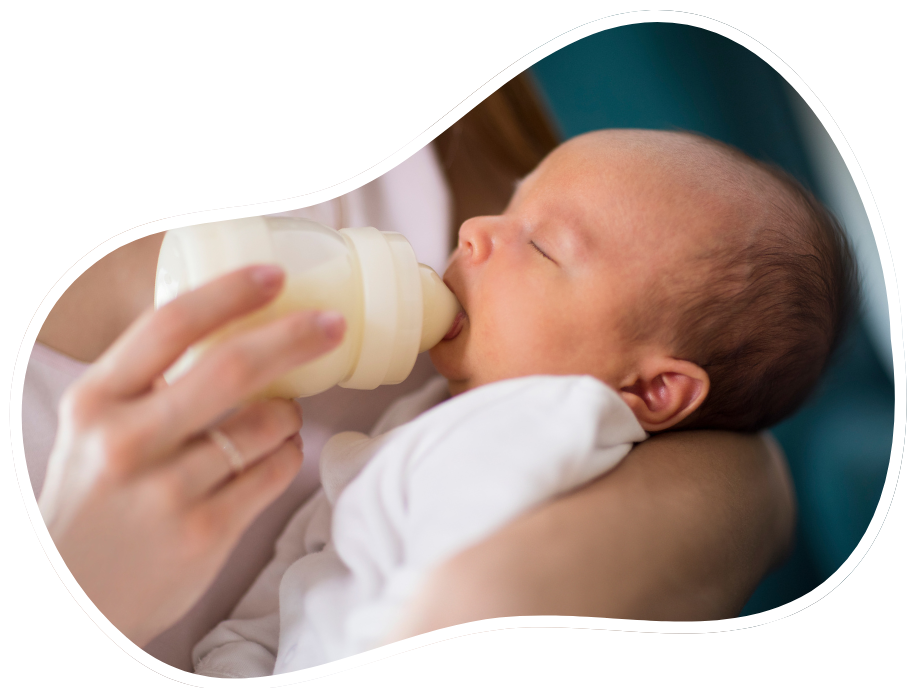
Not all bottles are the same and choosing the right bottle for your formula fed baby can feel confusing.
There are a lot of different opinions of what the best bottle is.
Some are glass, some are plastic. Some have wide necks, while others are narrow. Some have seemingly one million tiny parts.
There are pros and cons to each bottle.
While I don’t have a favorite bottle as a lactation consultant, I want to make sure your baby can make a seal around the bottle and that the flow is right (no dribbling, gulping, or coughing while drinking).
Click here for a guide to help you learn the pros and cons of each bottle to help you decide.
Tips from a lactation consultant: Before you have a baby, buy two types of bottles with different nipple shapes and do research on the right flow for newborns. For example, you might choose the Dr. Brown’s Narrow bottle and the Lansinoh bottle in case your baby has a preference. Do research on the right nipple flows for newborns before you have to use bottles.
Click here to learn about the top 10 most popular bottles available in the US with tips about nipple flows.
2. Time-saving formula making systems
Here is the question on every parent’s mind: should I buy a Baby Brezza?
As a pediatric nurse practitioner and LC, I have mixed feelings about the Baby Brezza.
In case you don’t know, the Baby Brezza is like the Keurig of formula making. You put your baby’s formula powder into a reservoir, fill up the water tank, and press a button every time your baby needs formula. It comes out warm and ready to go.
Sounds great, right?
Here is the problem…I have personally worked with more than 5 babies who had malfunctions with their Baby Brezza. Their babies did not get the right amount of formula mixed into the water.
If you want to use the Baby Brezza, I recommend:
- Reading the instruction manual front and back.
- Being meticulous about cleaning it.
- Dispensing the powdered formula without water and comparing the weight to the amount in a scoop.
- Hand making bottles and comparing how they look side by side.
Families love the Baby Brezza. It is so helpful in many cases. I just want to make sure your baby stays safe.
If you are looking for an easy alternative to the Baby Brezza, try a water dispenser for warm water.
3. Bottle warmers
Heating bottles consistently and safely can be stressful. Bottle warmers are a nice tool to ensure your baby’s formula is always warm.
Some warmers are portable, while others can warm multiple bottles or double as sterilizers. They prevent hot spots that microwaves can create.
Tips: Your baby doesn’t need warm bottles. Getting your baby used to room temperature or cold bottles can save you a step.
Keep a warmer near your bedside if you’re making bottles at night, and look for models that heat bottles in under five minutes. Always remember to check the temperature before giving your baby a bottle.
4. Formula mixing tools
A formula pitcher is one of my favorite tools to make your life easier.
They especially come in handy if you are boiling the water for formula in the early days to prevent cronobacter.
Shaking a bottle isn’t always enough to get rid of the clumps.
A formula pitcher allows you to mix 24 hours worth of formula, keep it in the fridge, and use it when your baby is hungry.
You can either keep it in the fridge in the pitcher itself or you can pre-pour it into the bottles.
Formula pitchers come in plastic and glass options and are inexpensive.
Here are my go-to’s:
5. Bottle cleaning essentials
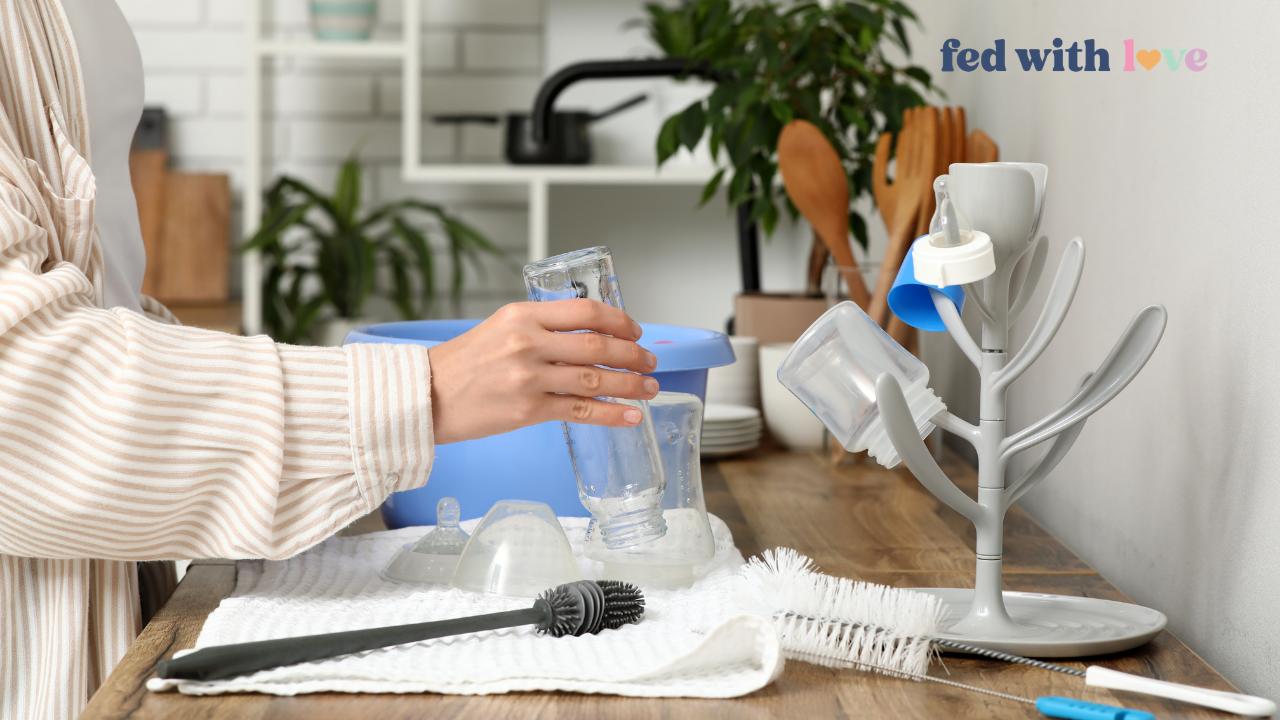
Keeping bottles clean is important, but it doesn’t have to take over your entire kitchen.
A few simple tools can make the whole process feel manageable instead of overwhelming.
Wash basin:
I always recommend keeping everything feeding-related in a separate basin in your sink. It helps prevent cross-contamination from regular dishes. You can use a collapsible basin, or even the plastic bin you brought home from the hospital. It doesn’t have to be fancy…it just needs to be separate.
Bottle brush:
A good bottle brush is worth it. Look for one with a smaller attachment to really get into the nooks and crannies of the nipple. Those tiny areas are where residue loves to hide.
I used straw brushes nearly every single day and still recommend them to families. They’re inexpensive and incredibly effective.
Baby dish soap:
You don’t have to use baby-specific soap. But many baby soaps are fragrance-free, which helps prevent bottles and nipples from holding onto a lingering scent. If you’ve ever smelled soap on a silicone nipple, you know what I mean.
Dishwasher basket:
Parents tend to either love or hate the dishwasher basket. Its main job is simple: keep all those tiny bottle parts and nipples from flying around your dishwasher. If you’re using the dishwasher regularly, it’s a small investment that can save a lot of frustration.
Drying rack:
You’ll want a designated spot for bottles to air dry. I’ve tried several drying racks over the years and personally preferred the OXO Tot space-saving rack because it keeps everything upright and organized without taking over the counter.
Sterilizer:
There are so many sterilizers on the market. Electric versions (some with a dryer), microwave options, or even just a large pot on the stove - they all work. The key is consistency. Choose the method that fits your kitchen and your routine.
6. Wash, dry & sterilize
If I could splurge on any baby item, it would be a bottle washer that can wash, sterilize and dry (that is the key part for me).
It is a luxury, but loading them up at night and having clean and dry bottles without the worry would make life much easier.
The Papablic is a favorite of mine.
7. Baby bottle storage ideas
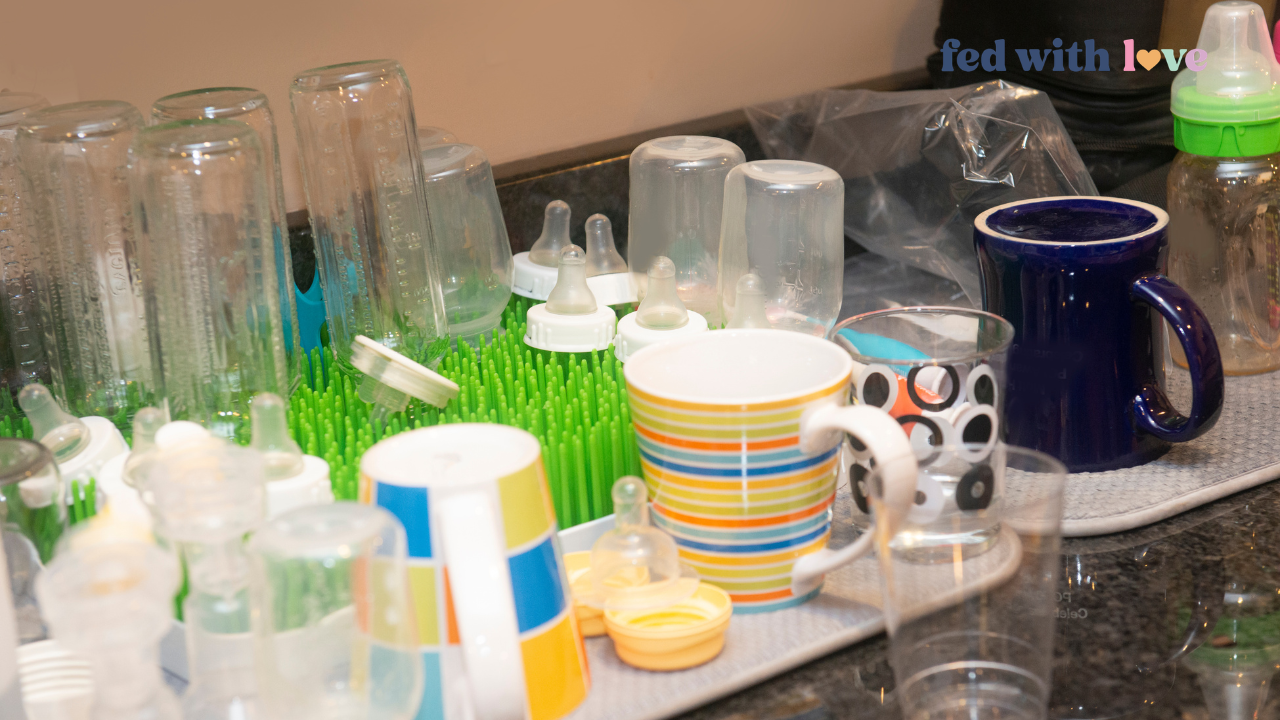
Baby bottles come with a lot of parts and somehow they seem to multiply. Without a system, cabinets get messy fast. You don’t need anything complicated, but organization makes life easier.
Small, clear storage bins
Use 1-2 clear bins to group items together. One drawer for nipples and one for small parts such as collars. This keeps everything contained and easy to grab. You can use another for pump parts if pumping is part of your journey.
Clear bins
Clear bins can help you organize your bottles, pump parts, and other small baby feeding items.
8. Insulated travel bags & coolers
Traveling with formula requires keeping it at the right temperature. Insulated travel bags and coolers protect pre-mixed bottles or pre-measured formula from heat and spills. This is especially important if your daycare will not mix your formula for you!
I love the Momcozy bag because it is large enough to fit 4 or 8 ounce bottles for daycare and easily hold formula.
9. Travel & on-the-go accessories
Feeding outside the house requires a little extra prep. Products like portable formula dispensers, insulated bags, and stackable storage make life easier. Multi-purpose containers can hold toddler snacks alongside formula essentials.
This dispenser is an Amazon favorite and is less than $5. Stackable containers can double as snack containers as a baby ages.
Tips: keep an emergency kit with an extra bottle, nipple, wipes, and formula.
- Other items
Every baby needs a large pile of burp cloths. Spit ups WILL happen, regardless of how a baby is fed. We had plenty around for both boys.
Mini-fridge
Hear me out on this one. Families love convenience, right? Having a mini-fridge in your room can be helpful, especially in the middle of the night. You can pre-make your formula and have it ready to heat or serve it to your baby cold!
This mini-fridge is around $50, but can save you from disrupted sleep.
How to Set Up a Formula Feeding Prep Station (Step-by-Step)
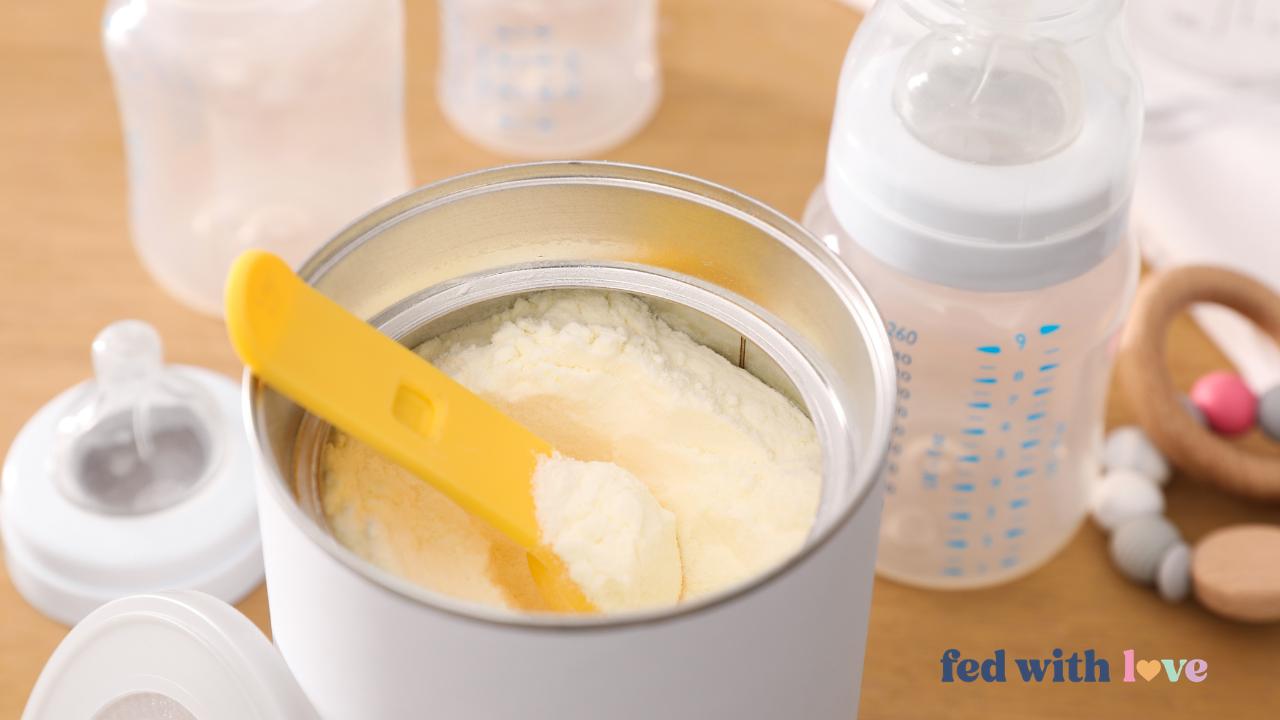
A formula feeding prep station can completely change your daily routine.
Instead of searching for bottles and powder every time your baby is hungry, everything lives in one organized spot.
Here’s how to create a DIY formula feeding prep station:
Step 1: Choose the Location
Pick a counter space or small rolling cart near an outlet and sink.
Many families use:
- A kitchen counter corner
- A bar cart
- A small three-tier rolling cart
Step 2: Gather Your Essentials
Your prep station should include:
- Bottles
- Nipples and collars (organized in bins)
- Formula storage container
- Formula dispenser or pitcher
- Bottle brush
- Burp cloths
- Bottle warmer (if using one)
Step 3: Organize by Workflow
Think in this order:
Clean → Mix → Feed → Wash
Keep clean bottles on top.
Keep mixing tools in the middle.
Keep cleaning tools below.
Step 4: Create a Nighttime Version
For night feeds, consider:
- Pre-measured formula in a dispenser
- A mini-fridge with premade bottles
- A small nightlight
- A bedside caddy
A baby bottle prep station reduces decision fatigue. It speeds up feeds. And it helps other caregivers stay consistent.
Bonus Tips for Stress-Free Formula Feeding
Even with the right products, staying organized is key. Create a dedicated feeding station, prepare for travel or daycare with a small caddy, and rotate products to see what works best for your baby.
With practical products and smart routines, formula feeding can become a stress-free part of your day.
Baby Formula Essentials Checklist for New Parents
If you’re overwhelmed and just want someone to tell you what you actually need for formula feeding, here it is.
Must-Have Baby Formula Essentials
- 8–10 bottles (for the newborn stage)
- Bottle brush with nipple cleaner
- Drying rack
- Formula (obviously!) Quiz: find the right formula for your baby
- Formula dispenser or formula pitcher if you want to make your baby’s formula once per day
- Burp cloths (more than you think)
- Separate wash basin for baby items
These are your true formula feeding must-haves. You can safely feed your baby with just these items.
Nice-to-Have (But Not Required)
- Bottle warmer
- Baby Brezza or formula maker https://urlgeni.us/amzn/y8Ddqe
- Mini-fridge for nighttime feeds
- Bottle sterilizer (otherwise just boil items in water on the stove)
- Rolling cart for a formula feeding prep station
- Insulated travel bag
When families are looking for baby formula essentials they often assume they need everything because everyone has products that will make your life easier. You don’t need all of them.
Start simple. Add convenience items if and when you need them.
How to Prepare Baby Formula Safely
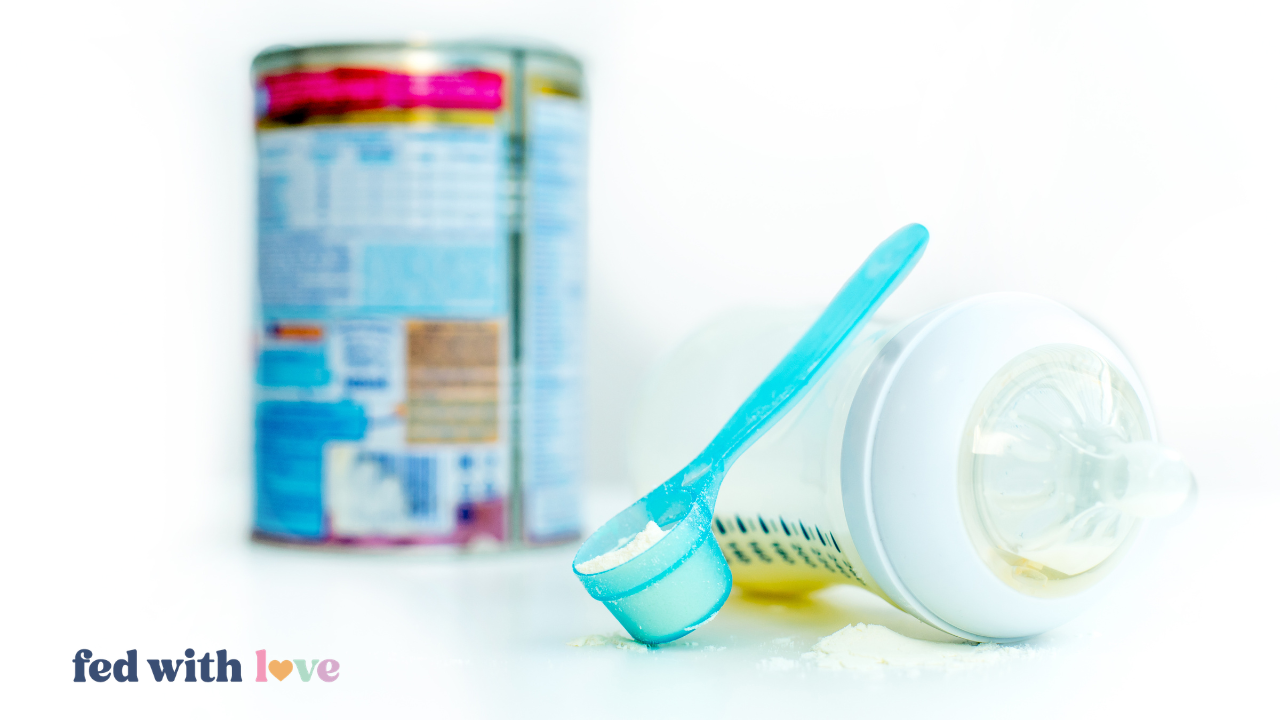
Safe formula prep matters, especially in the first few months of life.
Here are simple steps on how to prepare baby formula safely:
1. Wash Your Hands
Always wash hands before preparing bottles. It seems silly, but it is an important step that many of us forget! While our bodies can fight germs, our baby might not be able to and we touch so many things in a day.
2. Use Clean Bottles
Bottles should be thoroughly washed and fully air dried before use. This is one of the reasons I love a baby bottle washer AND dryer. It can take a long time for bottles to dry and wiping with a cloth can lead to contamination.
3. Water Safety
In the first 2-3 months of life (or if your pediatrician recommends it), boiling water and allowing it to cool slightly before mixing can reduce the risk of bacteria like cronobacter.
Always follow the instructions on your specific formula container.
4. Measure Carefully
Add water first, then level scoops of formula powder. Most formulas do not need to be packed (where you tap it and add more).
Incorrect ratios can lead to dehydration or inadequate nutrition.
How Long Is Formula Good For?
This is one of the most common questions parents Google at 2am.
Here are the official recommendations by the CDC:
- Room temperature (unused bottle): Up to 2 hours
- After baby starts drinking: 1 hour
- In the refrigerator (prepared): Up to 24 hours
- Powdered formula after opening: Usually 30 days (check the label)
If you’re ever unsure, throw it out. Formula is expensive, but safety matters more.
Do You Need a Formula Maker? (Baby Brezza vs Pitcher vs Hand Mixing)
Social media always shares about how the Baby Brezza is a feeding essential. Here are the pros and cons of the different ways of mixing formula:
Option 1: Baby Brezza (Automatic Formula Maker)
Pros:
- Fast
- Convenient
- Warm bottles instantly
- Clump and bubble-free bottles
Cons:
- Expensive
- Requires meticulous cleaning
- Possible malfunctions can affect formula-to-water ratio resulting in poor outcomes for babies
If you choose a formula maker, you must:
- Clean it exactly as instructed
- Test the powder output regularly
- Compare bottles to hand-mixed versions
Option 2: Formula Pitcher
Pros:
- Inexpensive
- Reliable
- Great for batch prepping 24 hours of formula
- Reduces clumps
Cons:
- Requires refrigeration
- Bottles may need warming
Option 3: Hand Mixing Each Bottle
Pros:
- No equipment needed (unless you choose to mix it with water from a warm water dispenser)
- Zero malfunction risk
Cons:
- More time-consuming
- Can be harder at night
- Potential for bubbles or clumps
You do not need a formula maker.
But if convenience reduces stress in your home, that matters too.
FAQ
Q1: What is the easiest bottle for formula feeding?
The best bottle for your baby depends on so many things. Check out my bottle guide to get the pros and cons of the top 10 most popular bottles.
Q2: Can I use these products with breastmilk too?
Yes! Bottles, warmers, and dispensers often work with expressed breastmilk.
Q3: Are pre-measured formula dispensers safe for travel?
Yes, as long as they are airtight and stored away from heat or sunlight.
Q4: How do I keep formula feeding organized at home?
Use labeled storage containers, stackable dispensers, and a dedicated feeding prep station. Nighttime caddies are helpful for late-night feeds.
Formula feeding doesn’t have to be stressful. With the right tools - dispensers, bottles, warmers, storage containers, and a prep station - you can save time, reduce mess, and make feeding a smoother experience for both you and your baby.
Check out my curated collection of formula feeding products in the store to set up a system that works perfectly for your family.
free guide
The FREE Printable 150 First Foods Guide
We hate SPAM. We will never sell your information, for any reason.