When Can Babies Start Solids? Signs of Readiness (Not Just Age)

Starting solids is one of the most exciting milestones in your baby’s first year but that doesn’t mean it isn’t confusing!
You may feel excited to watch your baby try food for the first time, while also feeling nervous about choking, timing, or “doing it wrong.”
Most babies are ready to start solids between 4 and 6 months of age, but age alone does not determine readiness.
Your baby needs to meet specific developmental milestones that show they are physically and developmentally prepared to eat safely.
Parents often ask:
How do I know if my baby is ready for solids?
Is my baby ready for solids at 5 months? Should I wait until 6 months?
What if my baby seems interested in my food at 4 months?
Are there risks to starting solids too early or too late?
This guide will walk you through exactly:
- when babies can start solids
- how to recognize true readiness
- what to expect in the early weeks
- how often to offer solids
- how starting solids may (or may not) affect sleep
Whether you plan to offer purees, finger foods, or a combination, you’ll walk away feeling confident and prepared.
When Should Babies Start Solids?
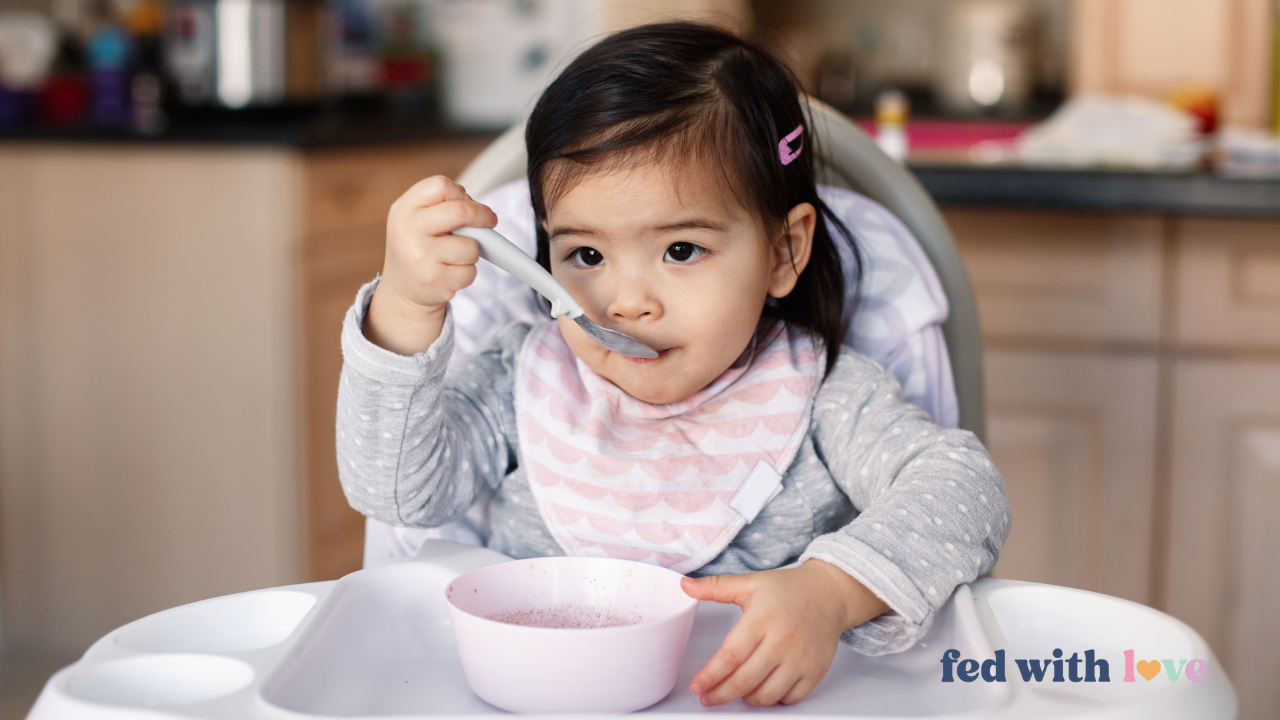
The American Academy of Pediatrics (AAP) and the World Health Organization (WHO) recommend starting solids around 6 months of age, though many pediatric providers discuss readiness as early as the 4-month visit.
As a pediatric nurse practitioner and IBCLC, my clinical opinion is this: your baby’s readiness is very different from the next baby. Each baby will be ready at a different time.
Readiness to start solids is based on developmental milestones…
I want to know that your baby can protect their airway, coordinate swallowing, and tolerate food safely to help decrease the risk for choking (one of the scariest things about starting solids in my opinion).
Some babies are ready closer to 5 months. Others may not be fully ready until 6.5 or even 7 months. That range is completely normal.
Following your baby’s individual timeline is okay…it’s safer and often leads to a more positive feeding experience for everyone.
Why Developmental Readiness Matters
Starting solids before your baby is developmentally ready can make the experience far more stressful.
Some of the negatives of starting solids too early include:
- increases the risk of choking
- gastrointestinal discomfort
- interfering with breastmilk or formula intake
It can also create stressful or negative feeding experiences for both baby and parent if the baby is not yet interested in food.
I have worked with many parents whose babies completely refuse to take solid foods because parents tried to get the baby to eat when the baby wasn’t ready.
I think of it this way…would you like it if someone made you eat food when you weren’t hungry? Babies don’t like it either.
Breastmilk or formula remains your baby’s primary source of nutrition until age one.
Solids in the first months are about learning skills, exploring textures, and building positive associations with food, not about calories or volume.
Waiting until your baby shows all the key signs of readiness helps ensure feeding feels safe, calm, and developmentally appropriate.
Signs Your Baby Is Ready for Solids (Readiness Checklist)
I’m often asked ‘do babies need teeth to start solids?’
The good news is that babies do NOT need teeth!
Instead, focus on these these six developmental signs:
- Your baby can sit upright with minimal support. Sitting upright protects the airway during feeding. Your baby doesn’t need to sit completely unassisted, but they should be able to sit well in a high chair or on your lap without slumping over and maintain that position for the entire meal.
It would be hard to eat a sandwich while laying sideways, right? You could do it, but it might be harder. Same with a baby! - Your baby has good head and neck control. This means they can hold their head steady and turn it side to side. Head control is essential for swallowing safely. It ties closely to core strength and posture, which are needed to keep a baby up through the whole feed.
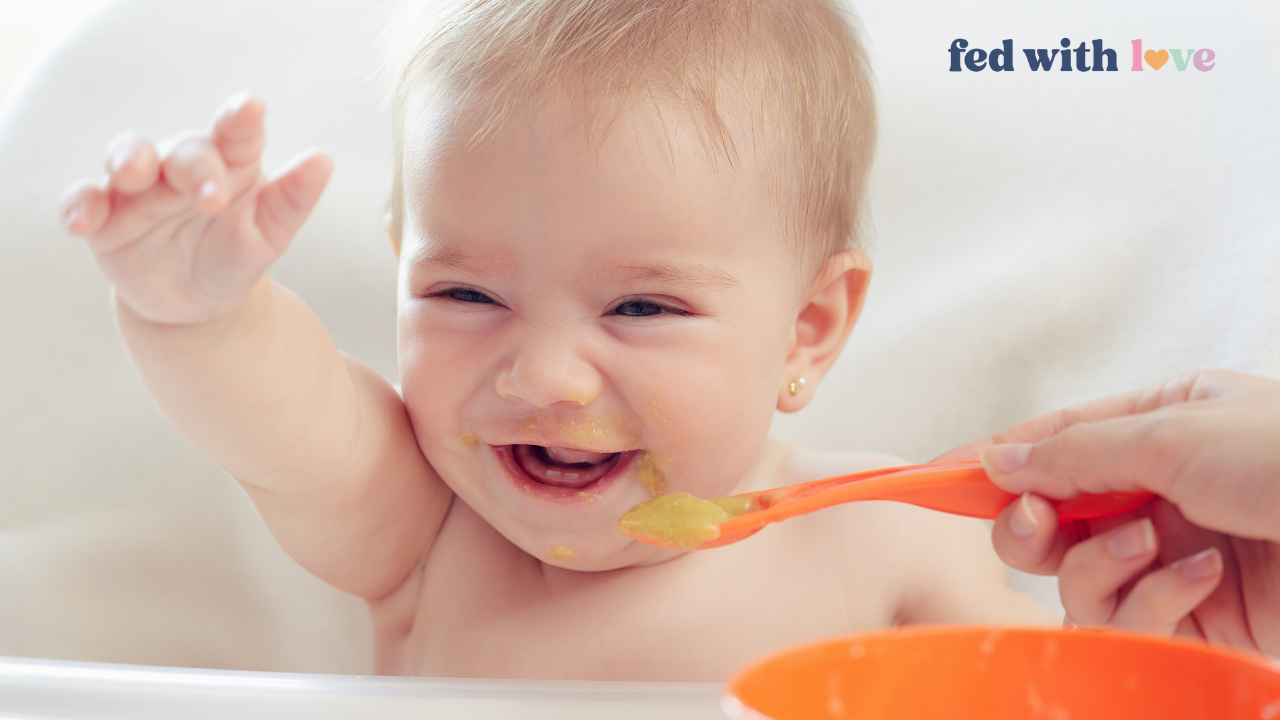
Being steady the whole feed is especially important for babies starting with baby-led weaning or finger foods vs. purees. - Your baby shows interest in food. This may look like watching you eat, reaching for food, leaning forward, or mimicking chewing motions. Sometimes they will even lick their lips.
Some babies look so ready beforehand. My 2nd baby was far more interested in my food than the breast. Keeping him away was hard!
It’s very difficult to feed a baby who is not interested, and forcing food often backfires.
If you offer food and they reject it or get mad, do not force it! Try again in a day or two. - The tongue-thrust reflex is fading. Babies are born with a reflex that pushes objects out of their mouth.
Around 4–6 months, this reflex begins to fade, allowing food to stay in the mouth and be swallowed.
If your baby pushes food out every single time, it may be worth waiting a week or two before trying again.
The tongue-thrust reflex is hard to observe and you may see it here and there even as your baby gets older. - Your baby can bring hands or toys to their mouth. This shows developing hand-eye coordination and oral motor skills and is especially important if you plan to offer finger foods or use a baby-led weaning approach.
Babies need to be able to see the food, pick it up, and bring it to their mouth. - Your baby opens their mouth when food is offered or leans toward the spoon or food. This shows readiness and willingness to participate in feeding.
If your baby is missing one or two of these signs, that’s okay. Waiting an extra one to two weeks and reassessing is often all that’s needed.
The best thing you can do is not pressure your baby to eat. If your baby is turning their head from the food, pushing it away, or seems agitated, try again in a few days!
Signs Your Baby Is Not Ready for Solids Yet
It’s best to wait if your baby consistently:
- Slumps over in the high chair (even after staying upright for a few minutes)
- Pushes food out with the tongue every time
- Shows no interest in food or watching others eat
- Has difficulty holding their head upright
- Turns their head away or refuses to open their mouth
Don’t worry that you are falling behind! Breastmilk or formula will continue to meet your baby’s nutritional needs until they are ready. Sometimes it isn’t until 7+ months.
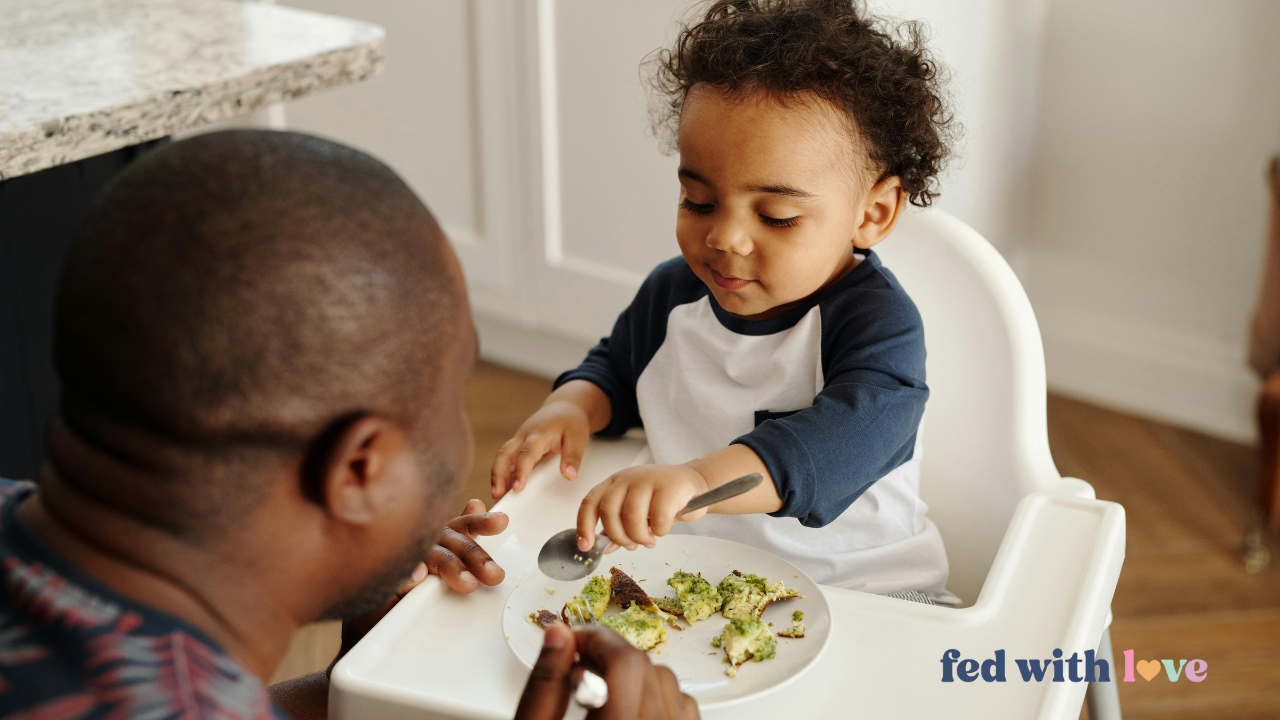
Signs Your Baby Is Ready for Baby-Led Weaning (BLW) or Finger Foods
If you are interested in baby-led weaning or offering finger foods, your baby should meet all readiness signs and a few more:
- The ability to grasp larger pieces of food (a raking grasp is appropriate early on)
- Bring food to the mouth and make it sometimes!
- Sit upright with no support
- Move food around in the mouth (baby needs to mash food between the tongue and the roof of the mouth)
- Spit food out when finished
I like to share with parents that babies need to master the readiness milestones to be eating finger foods or start baby-led weaning.
What to Expect When Starting Solids
Many parents are surprised by how little their baby eats at first
Early solids are messy (so, so messy), slow, and inconsistent!
In the beginning, your baby may:
- Only take one or two small spoonfuls
- Lick and mouth food without swallowing much
- Push all the food out of their mouth
- Miss their mouth entirely
- Throw food on the ground
- Feed food to the dog
This is normal. Learning to eat is a skill, and skills take time.
Expect mess, facial expressions, gagging, and variable interest from day to day.
Some days your baby may seem excited, and other days completely uninterested.
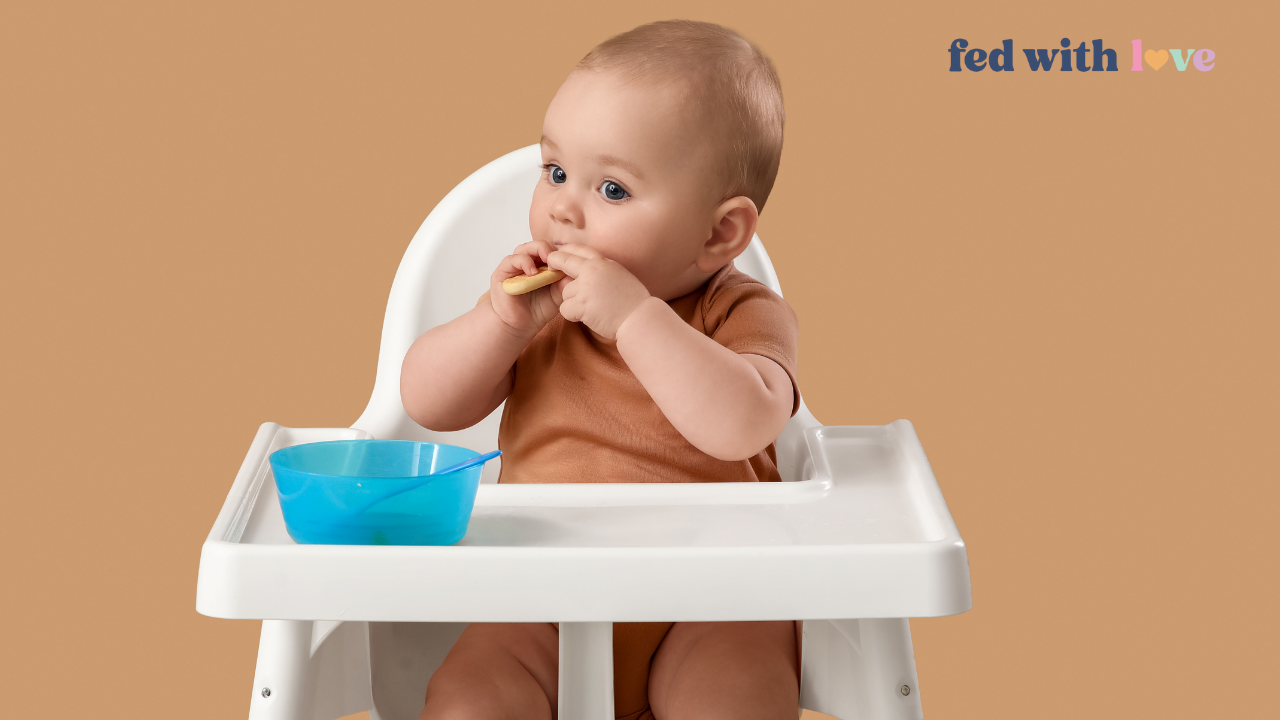
How Many Times Per Day Should You Offer Solids?
When first starting solids, once per day is enough.
Choose a time when your baby is awake and happy, and not overly hungry.
I often tell families to feed solids 30-45 minutes after breastfeeding or a bottle or closer to the end of a wake window.
Babies should be a bit hungry, but not hangry.
As your baby becomes more comfortable with eating, you can gradually increase to two meals per day, usually around 7–8 months, and then to three meals per day closer to 9–10 months.
Breastmilk or formula will remain the main source of nutrition throughout the first year and should still be offered on a typical schedule..
Sometimes it can feel hard to coordinate it all! Remember…some days you can offer food and others you can skip it. It doesn’t need to look a certain way.
Does Starting Solids Affect Sleep?
Starting solids does not improve sleep for most babies. It is not recommended as a strategy to help babies sleep longer (though I know many of us wish it would!)
While some parents notice temporary changes in sleep when solids are introduced, research does not support solids as a solution for night wakings.
In fact, starting solids too early can sometimes disrupt sleep due to digestive discomfort.
Sleep changes around this age are often related to development, growth spurts, or changes in sleep cycles.
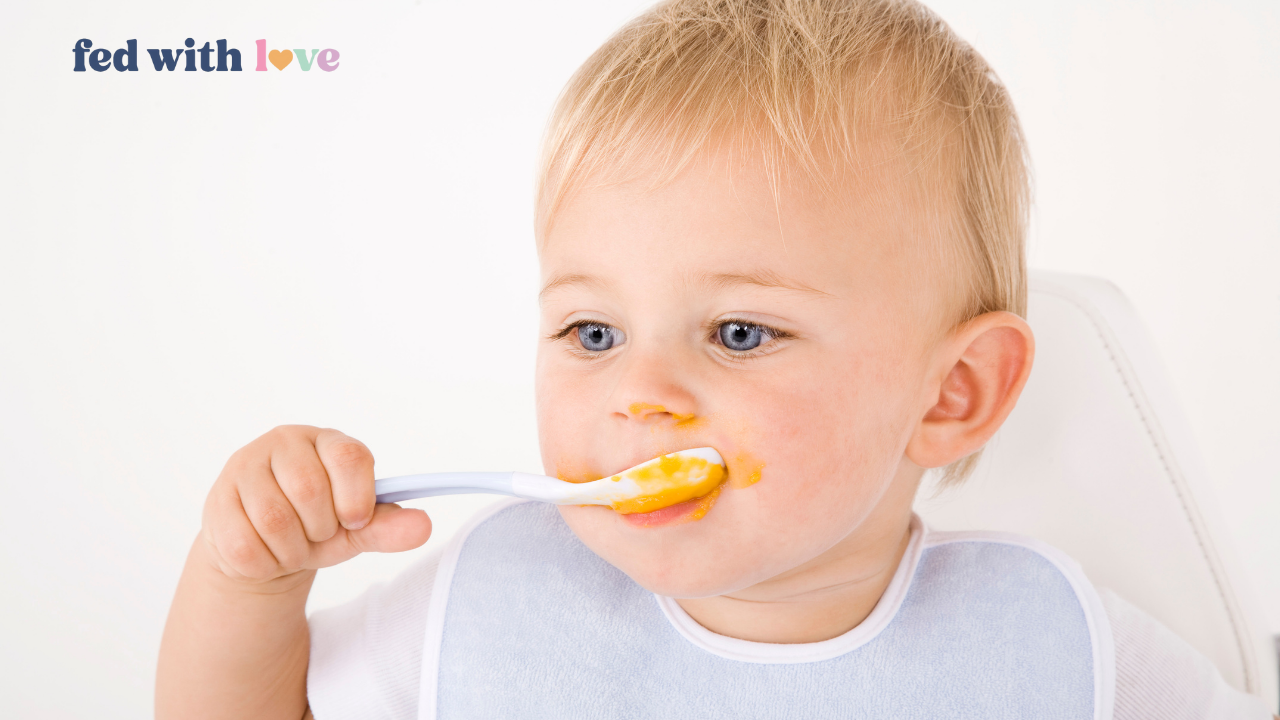
How to Start Solids Safely and Confidently
Begin when your baby is well-rested, content, and not too hungry.
Use a supportive high chair or seating arrangement that keeps your baby upright.
Start with a method you feel comfortable with based on your baby’s development. It can be purees or soft solid foods for baby-led weaning.
Iron-rich foods are a great place to start, along with fruits, vegetables and foods with healthy fats for brain growth. Bananas and rice-cereal can be constipating for babies.
Expect slow progress and follow your baby’s cues rather than focusing on volume.
Do You Have to Choose Between BLW and Purees?
No. Many families choose to do both and that is okay!
You may spoon-feed a puree while also offering soft finger foods like avocado or toast alongside.
There is no single “right” way to start solids. What matters most is that your baby is developmentally ready, safe, and supported during meals.
Common Questions Parents Ask About Starting Solids
Gagging is common and often looks dramatic, but it is a protective reflex. As long as your baby recovers quickly, it is usually part of learning to eat.
If your baby refuses solids, try again later. It can take 10–15 exposures before a baby accepts a new food. Keep feeding experiences low-pressure and responsive.
Teeth are not required to start solids. Babies use their gums to mash soft foods safely.
If your baby is 6 months old but not yet ready, it is okay to wait. Development varies. Reassess in one to two weeks and talk with your pediatrician if you have concerns.
Early introduction of allergens like peanut butter and eggs is now recommended. Offer very small amounts in age-appropriate forms and monitor for reactions.
As a pediatric nurse practitioner and lactation counselor, I’ve helped thousands of families navigate this transition. My best advice is to go slow, follow your baby’s lead, and keep feeding relaxed and pressure-free.
You don’t need a complicated feeding schedule or fancy tools.
You need a baby who is ready (and all caregivers need to be ready, too!)
If your baby checks most of the readiness boxes, you’re ready to begin.
If not, waiting a little longer is not a setback.
Trust your baby and always speak with your pediatric provider about the best steps for your baby!
Sources
- Centers for Disease Control and Prevention (CDC). When, What, and How to Introduce Solid Foods.
- American Academy of Pediatrics (AAP). Starting Solid Foods. HealthyChildren.org.
- World Health Organization (WHO). Complementary Feeding Guidelines.
- Mayo Clinic. A Guide to Starting Your Baby on Solid Food.
- National Institute of Child Health and Human Development (NICHD). Infant Feeding and Nutrition.
- Children’s Hospital of Philadelphia (CHOP). Infant Feeding Guide.
free guide
The FREE Printable 150 First Foods Guide
We hate SPAM. We will never sell your information, for any reason.