Baby-Led Weaning vs. Purees: What Parents Need to Know

Starting solids is one of the most exciting milestones in your baby’s first year…but it can also feel overwhelming, especially when you’re trying to decide between baby-led weaning vs purees.
If you’ve been researching starting solids for your baby, you’ve likely come across strong opinions on both sides of the BLW vs purees debate.
Some make baby-led weaning sound like the only “right” way to feed your baby, while others recommend sticking with traditional purees.
Here’s what most parents actually need to hear:
You don’t have to choose just one method and you don’t have to get this perfect. There is no one right way to feed your baby.
In this guide, we’ll break down everything you need to know about baby-led weaning vs purees, including:
- The key differences between BLW and purees
- The pros and cons of each feeding method
- Safety considerations, including gagging vs choking
- How to know when your baby is ready for solids
- Whether you can combine baby-led weaning and purees
- How to choose the best approach for your baby and your lifestyle
By the end, you’ll have a clear, realistic understanding of starting solids, so you can move forward with confidence instead of second-guessing every bite.
(Want to hear more on this? I covered baby-led weaning vs purees, signs of readiness for starting solids, and choking vs gagging below in my YouTube video)
What Is Pureed Baby Food?
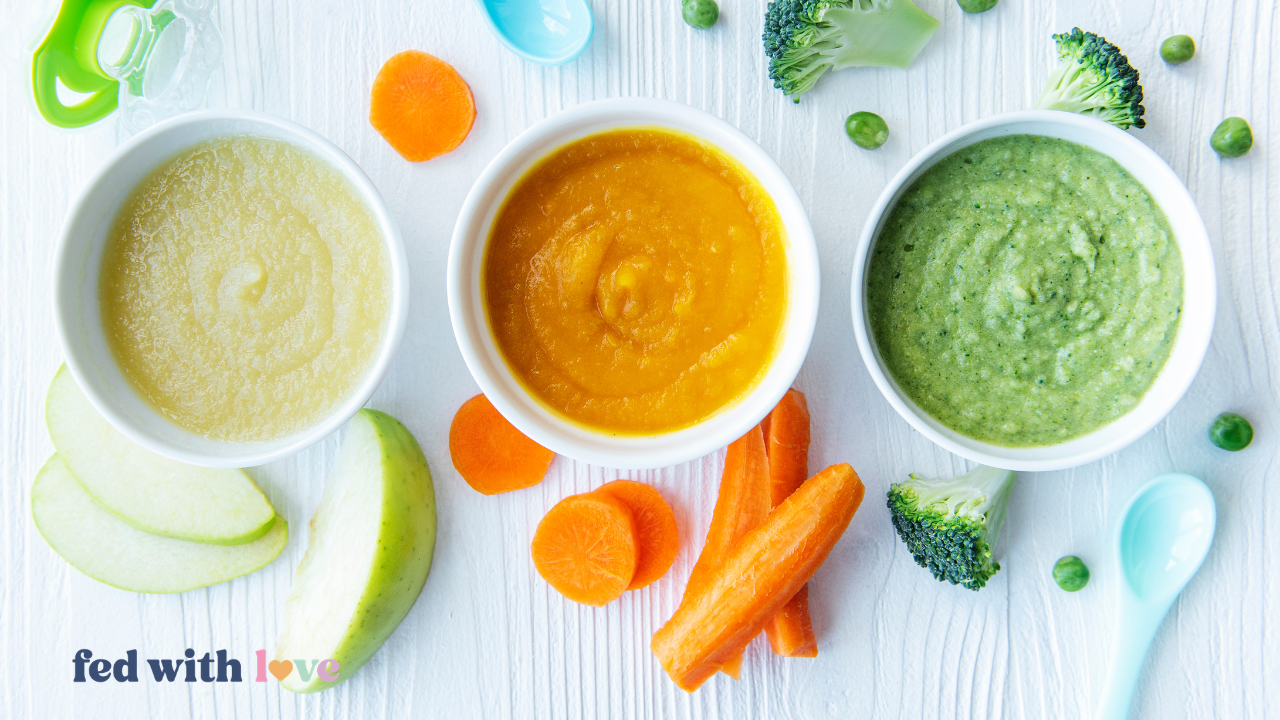
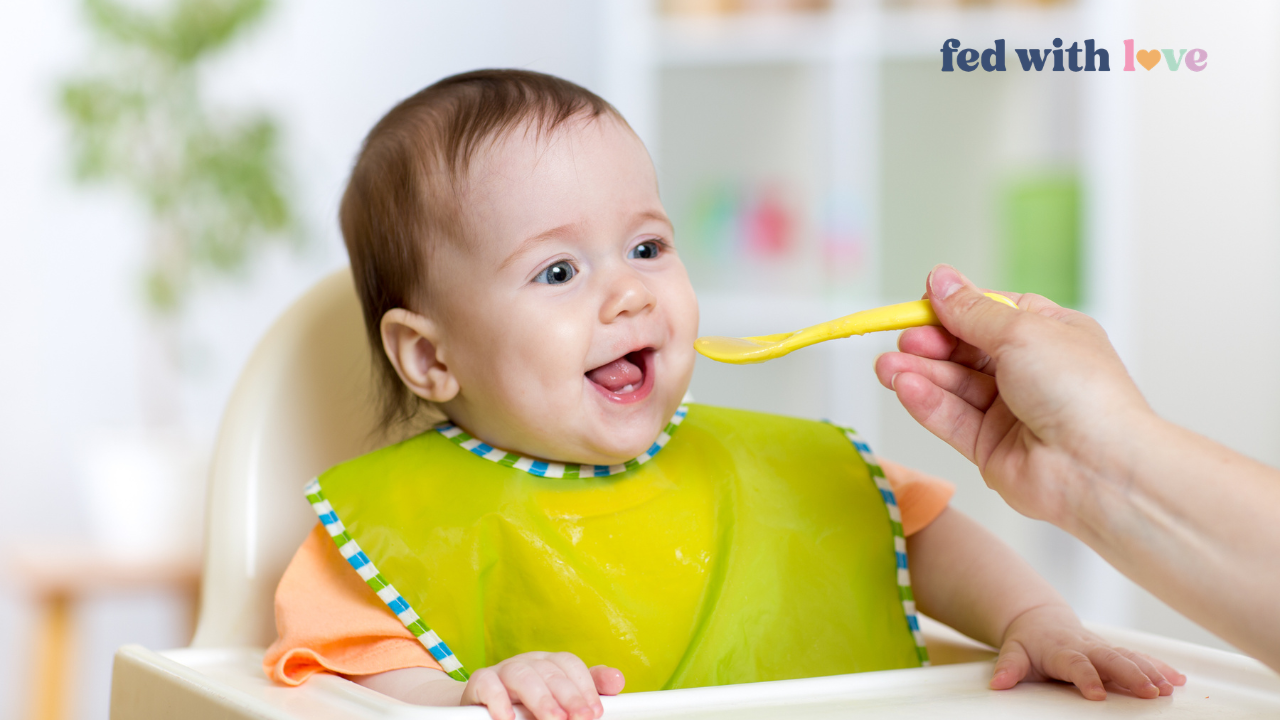
Purees are exactly what they sound like: food blended or mashed into a smooth consistency and spoon-fed to your baby by you.
This is the more traditional approach to starting solids. Most grocery stores carry a ton of ready-made options, or you can make your own at home and freeze them in batches.
Purees are generally safe to start between 4 to 6 months, though some families start a little earlier based on their pediatrician's guidance.
Benefits of Pureed Baby Food
- Easy to find and prep. Store-bought options are everywhere. Homemade batches can be frozen ahead of time, which is a lifesaver on busy days.
- You know exactly how much your baby ate. This is huge for a lot of parents, especially first-timers who need that reassurance.
- Great for introducing new flavors. You can mix and match fruits, vegetables, and proteins easily.
- Easier to digest. The blending does some of the work that chewing would, which can be gentler on younger babies just starting out.
- Helpful for allergen introduction. When you're introducing a potential allergen, knowing exactly what your baby ate matters.
Cons of Pureed Baby Food
- Your baby will eventually need to transition to finger foods and that shift can be tricky if they've only ever had smooth textures.
- It's easy to accidentally override fullness cues. "Just one more bite" adds up. Spoon-feeding requires extra attention to your baby's signals.
- Less opportunity for self-feeding practice in the early months, which means those motor skills develop a little later.
- Texture progression matters. Staying in smooth puree mode too long can make it harder for babies to accept new textures later.
What Is Baby-Led Weaning?
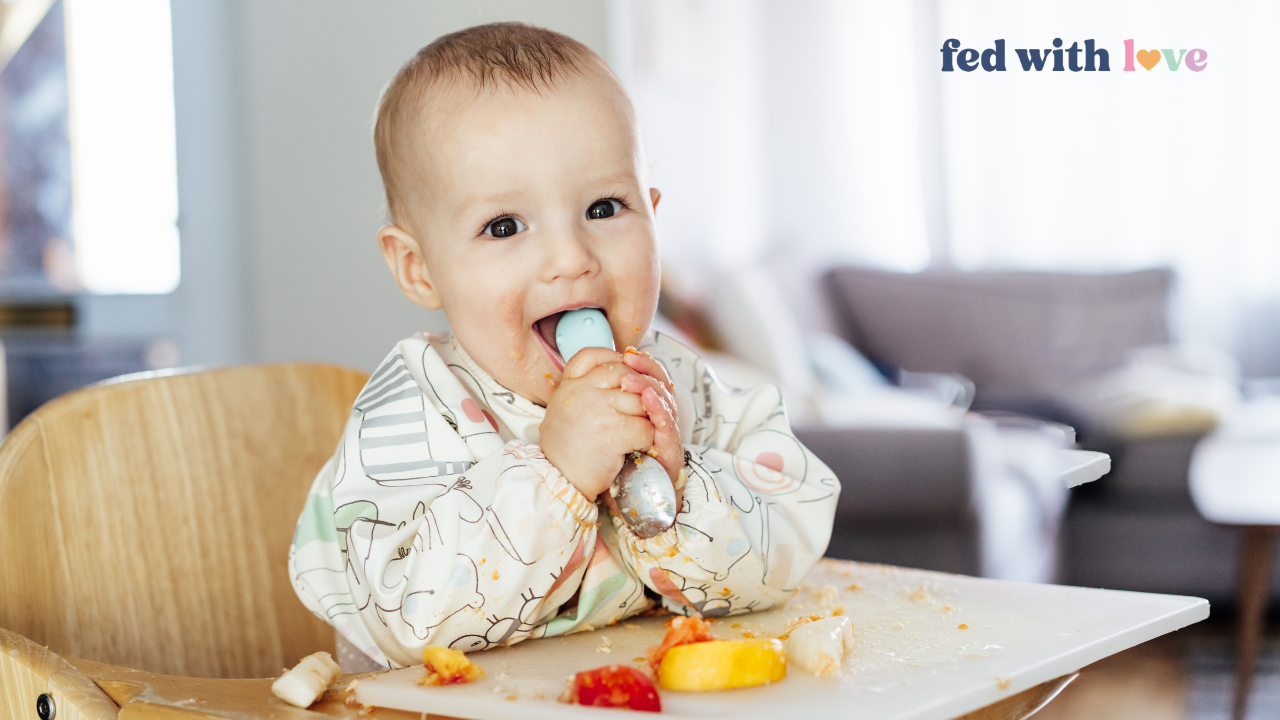
Baby-led weaning (BLW) skips the purees and goes straight to soft finger foods that your baby picks up and feeds themselves. You offer the food and they decide what and how much to eat.
BLW should start around 6 months once your baby has “mastered” all of their developmental milestones (more on that below)
Typical first BLW foods include things like steamed broccoli florets, ripe avocado spears, scrambled eggs, soft sweet potato sticks, or banana.
The rule of thumb: if you can squish it between your finger and thumb, it's soft enough.
There are some textured foods that are safe to introduce early, but it is important to make sure you are preparing all food safely and correctly.
Benefits of Baby-Led Weaning
- Your baby learns to self-regulate from the start. They eat until they're full and stop when they're done.
- Motor skill development is built into mealtime. Picking up food, bringing it to their mouth, and managing it is good for fine motor skill development.
- Wide flavor and texture exposure early on. BLW babies are typically eating whole foods from the beginning.
- Can actually be more convenient long-term. Once you're past the early weeks, your baby is often just eating a modified version of what you're already making.
- Mealtime becomes more of a family experience. Everyone at the table together from the start.
Cons of Baby-Led Weaning
- It is messy. There is no version of BLW that isn't messy. There are products that make it easier to clean up after your baby though!
- You won't always know how much they ate. This is probably the hardest part for most parents. A lot ends up on the floor, especially at first.
- Gagging can be stressful to watch. Even when you know it's normal, it does not feel normal in the moment.
- Not all babies are ready at exactly 6 months. Developmental readiness matters more than a certain age and some babies need more time.
- Requires more planning for food prep. You have to think carefully about size, shape, and texture every single time.
Looking for items to make your life easier while starting solids? Click here for my go-to items as a baby feeding expert.
Gagging vs. Choking…What You Need to Know
If you're considering BLW (or really starting solids at all), understanding this distinction is probably the most important thing I can tell you.
Gagging is normal. I want to be completely honest here. I’ve seen my kids gag MANY times. It's loud, it looks scary with a red face, coughing. I know it is a protective reflex, but that doesn’t make it easier to watch. Your baby's body is doing exactly what it's supposed to do. Gagging is common, but it is still so hard not to intervene by smacking them on the back. I did this one too many times.
Choking is different. Choking is silent. That's the thing to remember. No sound means the airway is blocked, and that's a real emergency.
Max choked on appropriately cut and prepared pasta. It started off as a cough but quickly turned into a quiet wheeze. His lips turned blue and he had fear in his eyes.
I called for my husband while removing the tray from the high chair before doing back blows. He coughed the pasta out.
We both cried on the floor.
Regardless of whether you do BLW or purees, always supervise meals and know the foods to avoid:
- Whole grapes, cherry tomatoes, and blueberries (cut these lengthwise)
- Raw hard vegetables (raw carrots, raw apple)
- Whole nuts
- Sticky globs of nut butter
- Popcorn
- Round pieces of hot dog
Knowing infant first aid before you start solids is something every caregiver should do before starting solids.
It could be the difference between life or…not life.
Babies can choke on any food. The ones listed above are just higher risk.
Is Your Baby Ready to Start Solids?
Before anything else, you want to make sure your baby is actually ready.
Signs of readiness (look for all three):
- Can sit with minimal support and hold their head steady. This is especially important when starting finger foods. It is hard to eat when slumping to the side. Having your baby upright is protective against choking.
- Shows interest in food…watching you eat, reaching for your plate. It is VERY hard to get a baby to eat when they are not interested. It will result in a struggle for the both of you.
- Has lost the tongue-thrust reflex (not automatically pushing food out with their tongue). If you put food into your baby’s mouth and they immediately push it out, they may not quite be ready.
For BLW, I like to remind parents that babies should have “mastered” the necessary developmental milestones in order to keep them safe.
Teeth are NOT required for either method. Babies can gum soft foods just fine.
Can You Combine Baby-Led Weaning and Purees?
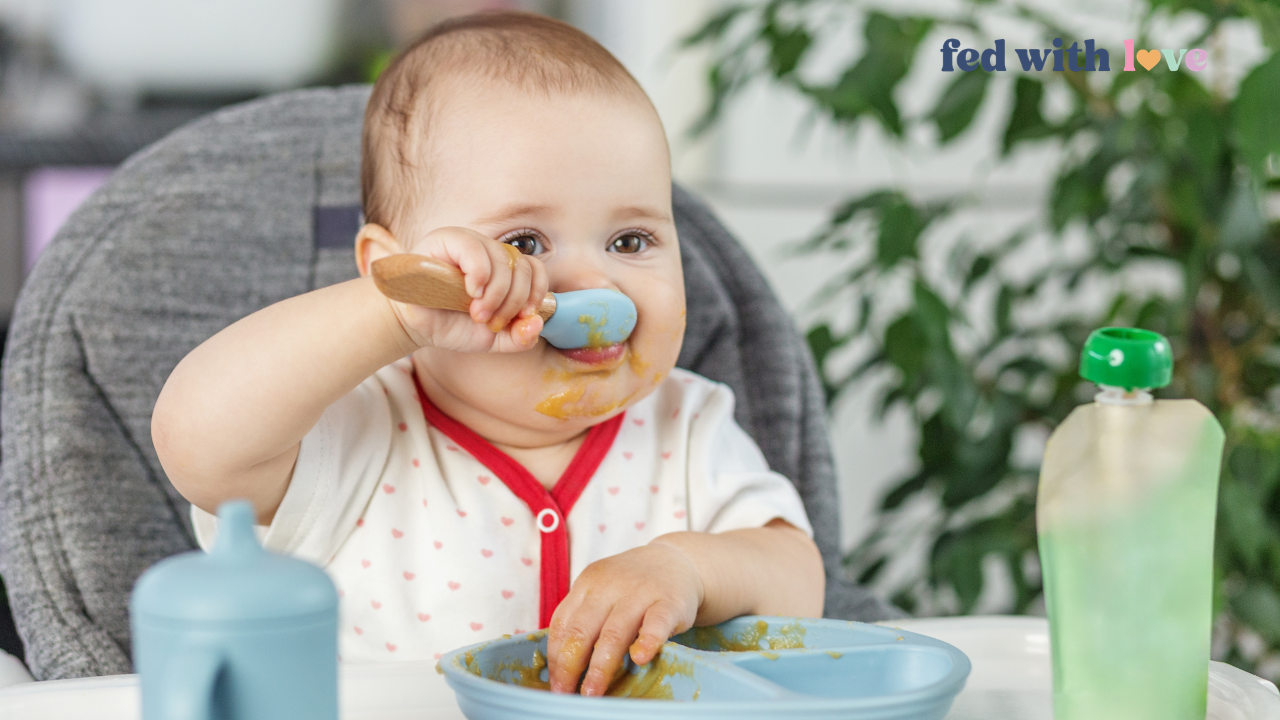
Yes. Absolutely yes and most families approach solids this way, even if social media tells us otherwise.
This is something I want every parent to hear: you have not "failed" at BLW because your baby also eats purees. I hear this all the time.
Combination feeding or offering both purees and finger foods is completely safe and honestly what a lot of families naturally end up doing. There's no rule that says it has to be one or the other.
Some examples of what this can look like in real life:
- BLW at home, pouches when you're out and on the go
- Purees at daycare (because a lot of daycares prefer it), finger foods at dinner
- A preloaded spoon of pureed sweet potato next to a steamed broccoli floret
- Starting with purees at 6 months to build your confidence, then adding finger foods by 7–8 months
Do whatever actually works for your family.
The goal is to offer a variety of textures and flavors, add in important nutrients, and introduce allergens to reduce the risk of food allergies.
Baby-Led Weaning vs Purees: Which is Right For Your Baby?
Instead of asking "which method is better," here's what actually matters:
Your baby's readiness. Can they sit steadily? Are they showing interest in food? Meet your baby where they are developmentally, not where an Instagram reel says they should be.
Your comfort level. If watching your baby gag is going to send you into a spiral of anxiety every single mealtime, that stress is not good for either of you. A relaxed feeding environment matters.
Your daily reality. Busy schedule, daycare logistics, older kids, a partner who's not on board with the mess. Sometimes you need to feed your baby a certain way because of your situation and that is okay.
Your baby's preferences. Some babies love the independence of self-feeding from day one. Others want the comfort of being fed. You'll figure out pretty quickly which one yours is.
What Actually Matters More Than Baby-Led Weaning vs Purees
Here's the thing I really want you to take away from this:
The BLW vs. purees debate gets so much airtime, but it's honestly not the most important decision you'll make about feeding your baby.
What matters most:
Variety over time. Your baby needs exposure to a wide range of flavors, textures, and foods — regardless of how they arrive. It usually takes 10–15 exposures before a baby accepts something new. Consistency wins here, not method.
Texture progression. Whatever you start with, your baby needs to be working with more varied textures by 9-10 months. Don't stay in smooth puree mode forever.
A low-pressure environment. No forcing. No "just one more bite." No turning meals into a battle. The emotional tone of mealtimes has a bigger impact on your child's relationship with food than whether food came off a spoon or from their own fist.
Your confidence. A parent who feels steady and calm at mealtimes is giving their baby something really valuable. Don't let the internet make you second-guess yourself constantly.
Frequently Asked Questions About Baby-Led Weaning vs Purees
Do I have to stop breastfeeding or formula when I start solids?
Nope…not even close. Starting solids doesn't mean replacing milk feeds. Breast milk or formula stays the primary source of nutrition until 12 months. Think of solid foods in the early months as practice and exploration, not meals. Keep offering milk feeds as usual and let your baby lead how much solid food they actually eat.
My baby keeps spitting food out. Are they not ready?
Maybe. The tongue-thrust reflex (where babies automatically push things out of their mouth) is normal and usually fades around 4–6 months. If your baby is doing this a lot, it could mean they need another week or two before starting. But some babies just take a few sessions to get the hang of it. Give it a little time before assuming it's not working.
What if my daycare only does spoon-feeding?
This is so common and it does not mean you've failed at BLW. A lot of daycares are more comfortable with purees for safety and logistics reasons…that's completely valid. You can do BLW or finger foods at home and purees at daycare. Combination feeding is totally safe, and your baby can absolutely handle both.
For me, I felt more comfortable giving Elliot purees at daycare because I was scared about how the staff would handle a choking event. He started getting finger foods at daycare around 11 months when the risk was lower.
Does BLW lead to less picky eating?
This comes up a lot. The honest answer: maybe, but it's not guaranteed. Early exposure to a wide variety of textures and flavors, which BLW tends to naturally include, does seem to be associated with more varied eating later. But plenty of BLW babies still go through picky phases, and plenty of puree-fed babies are fantastic eaters. The variety and repeated exposure matter more than the method itself.
Both of my boys ate everything as babies. Little human garbage disposals. My 6 year old is *very* particular about his food and is picky, despite hitting 100 foods before 1. My 3 year old has become more selective, but still eats a wide variety of flavors. So much depends on their temperament. I have hope Max will start eating more with continued exposure!
How do I know if my BLW baby is getting enough iron?
This is a really important one. Iron is the nutrient parents doing BLW need to be most intentional about, because babies' iron stores from birth start to deplete around 6 months. A lot of easy-to-offer BLW foods (soft fruit, steamed veggies) are low in iron. Make sure you're including iron-rich options regularly, think soft-cooked meat, eggs, mashed beans, lentils, and iron-fortified foods. Pairing them with a vitamin C source (like a little fruit alongside) helps with absorption.
Click here for iron rich foods for babies and toddlers.
Can I start BLW before 6 months?
They *can* be ready before 6 months, but most of the time, I’d wait. BLW specifically requires developmental skills…sitting with support, good head control, coordinated hand-to-mouth movement, that most babies don't have before 6 months. Starting finger foods too early increases risk. If your pediatrician has suggested starting solids before 6 months for a specific reason, purees are the safer starting point in that case.
My baby gags every single meal. Is that normal?
In the early weeks of BLW? Yes, it can be very normal. Gagging is frequent when babies are first figuring out how to manage food in their mouths. It should gradually decrease as they get more practice. If gagging is happening at every meal well past the first month, or if you notice your baby seems distressed or is refusing food because of it, that's worth bringing up with your pediatrician. Persistent feeding difficulties can sometimes signal something that a pediatric feeding therapist can help with.
Do I need to introduce foods one at a time?
The "one new food every three to five days" rule is mostly about tracking potential allergic reactions. For common allergens (peanuts, eggs, tree nuts, dairy, wheat, soy, fish, shellfish, sesame), you do want to introduce them individually so you can identify a reaction clearly. For low-risk foods like most fruits and vegetables, you don't need to be quite as rigid about it.
Is it okay to use pouches?
Yes. Pouches can be great. Where pouches can become an issue is when they replace most meals long-term, because babies miss out on texture exposure and the sensory experience of eating actual food. Use them as a tool, not a primary food source.
Click here to learn about what to look for in a baby food pouch.
When should I be worried and call the pediatrician?
Trust your gut…you know your baby. But some specific things worth a call: your baby is losing weight or not gaining appropriately, they're consistently refusing all solids past 8 months, they're gagging or vomiting at almost every meal well past the first few weeks, or something just feels off about the way they're eating or swallowing. A pediatric feeding therapist can also be a great resource if you're hitting a wall.
If you’re feeling stuck trying to choose between baby-led weaning and purees, you’re not alone.
But you also don’t need to overcomplicate this decision.
Both approaches can work. Both can be safe. Both can support healthy development.
What matters most is that you feel confident, your baby is given opportunities to learn, and feeding doesn’t become a constant source of stress.
free guide
The FREE Printable 150 First Foods Guide
We hate SPAM. We will never sell your information, for any reason.